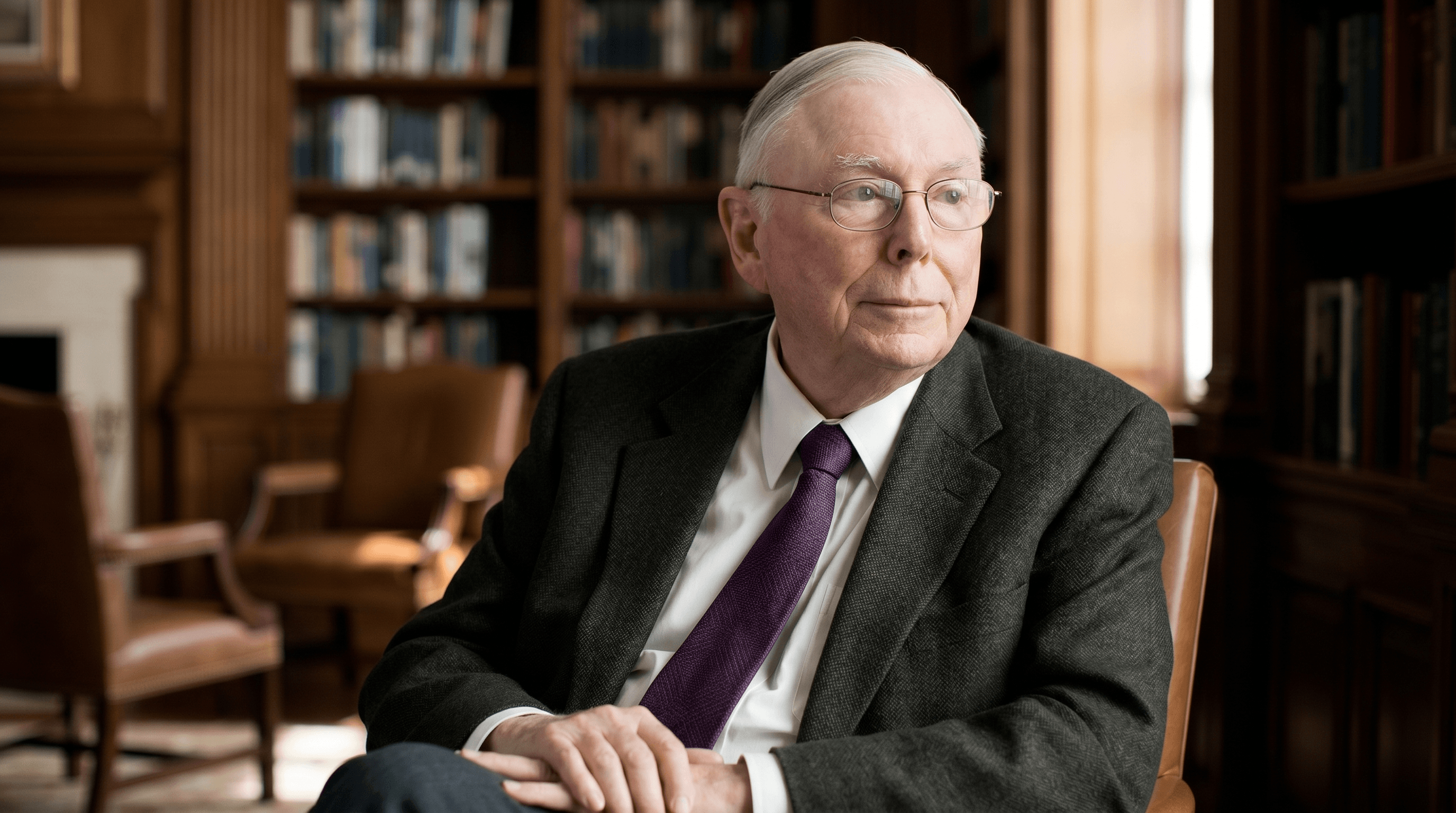
Chuck Akre's "three-legged stool" strategy compounded the Akre Focus Fund at roughly ~16.78% annually since 2009 — nearly ~324 basis points ahead of the S&P 500 — using just three questions to filter every holding. One of his long-term picks, Moody's (MCO), is the archetype of what he calls a "compounding machine."
Who is Chuck Akre?
In one line: a Virginia-based value investor who built one of the best multi-decade compounding results of the modern era using a single, simple framework. Born in 1942, Akre graduated from American University with a degree in English literature — not finance — and stumbled into the brokerage business almost by accident. After reading Benjamin Graham's The Intelligent Investor in the early 1970s, he began studying Warren Buffett's letters obsessively. That was the turning point.
Akre spent two decades at regional brokerages in Virginia before founding Akre Capital Management in 1989. The firm has always operated out of Middleburg, a small Virginia town far from Wall Street — a deliberate geographic choice that let him read, think, and avoid the noise.
In 2009, at the depths of the financial crisis, he launched the Akre Focus Fund. Since inception it has compounded at roughly ~16.78% annually against the S&P 500's ~13.54% — a spread of roughly ~324 basis points a year for more than a decade. That is the math that made him a Wall Street icon.
The simple idea: a three-legged milking stool, where all three legs must hold or the stool tips. If any one leg is weak, the whole structure fails. For Akre, the three legs of any investment are:
- An extraordinary business (high returns on capital, durable moat).
- Talented and honest management (both operator and capital allocator).
- A reinvestment runway (the ability to deploy cash at high rates for a long time).
The key insight is that all three legs must hold simultaneously. A great business with bad management is a trap. Great management without reinvestment opportunity turns into a dividend stream, not a compounder. And a reinvestment story without durable economics compounds only until reality catches up.
Akre refers to businesses that pass all three tests as "compounding machines." He wants inputs — capital — to be converted into outputs — earnings and equity value — at the highest possible long-run rate. Everything flows from that.
What are Akre's five core investment principles?
Five ideas repeat throughout Akre's letters and interviews.
First, high returns on invested capital. Akre looks for businesses that earn ROIC well above the cost of capital, typically in the ~20%+ range. Low-ROIC businesses cannot compound regardless of growth rate.
Second, concentration over diversification. The Akre Focus Fund typically holds only ~15–20 positions. When you find a compounding machine, Akre argues, own a lot of it. Diversifying away from quality into mediocre peers is the real risk.
Third, long holding periods. Turnover in the Akre Focus Fund has historically been below ~10% per year — meaning the average holding lives in the portfolio for nearly a decade. Patience is the real source of compounding.
Fourth, avoid overpaying. Akre has often said: "We want extraordinary businesses, but we also want to pay a price that lets us compound." A great business at a stretched price is a mediocre investment. See our fundamental analysis primer for the valuation tools.
Fifth, ignore the macro. Akre almost never talks about Fed policy, recession probabilities, or sector rotations. His framework is bottoms-up and business-specific.
Famous Akre quotes
- "If you own a business that will grow its value per share at a double-digit rate over time, time is on your side."
- "We are looking for compounding machines. Businesses that grow economic value per share at double-digit rates over multi-year periods produce outstanding outcomes."
- "The stool has three legs — kick out one and the whole thing falls."
- "The longer the period a business can reinvest its capital at high rates of return, the more valuable the business is."
- "We have no edge in macroeconomic forecasting. Our edge is in patient analysis of individual businesses."
These are not stock tips. They are filters. Most of Akre's public writing is a variation on the theme that the hard part of compounding is not finding the great business — it is sitting on the position for long enough to let compounding work.
Which stocks fit Akre's framework today?
Several US-listed names capture the three-legged-stool template. Classic long-term winners have included Mastercard and Visa — both payments duopolists. Others were American Tower, a cell-tower REIT with near-monopolistic economics, and Roper Technologies, a serial compounder in niche industrial software.
In the current Akre Focus universe and the broader philosophy camp, the US-listed names fitting the stool template include:
| Company |
Ticker |
Why it fits the stool |
| Moody's |
MCO |
Credit-rating duopoly + recurring revenue |
| S&P Global |
SPGI |
Index/analytics moat + reinvestment runway |
| O'Reilly Automotive |
ORLY |
Asset-light retail + decades of reinvestment |
| Verisk Analytics |
VRSK |
Data monopoly in insurance + pricing power |
| Adobe |
ADBE |
Creative-suite lock-in + high incremental margin |
| Intuit |
INTU |
Tax + QuickBooks + embedded financial data |
| Booking Holdings |
BKNG |
Travel-platform network effects |
| Costco |
COST |
Membership moat + capital-light growth |
Some of these — for example Moody's (MCO) and S&P Global (SPGI) — are textbook three-legged stool names because they have near-monopolistic economics, disciplined management, and decades of reinvestment runway via data and analytics acquisitions. Others like Costco (COST) and Booking Holdings (BKNG) fit the stool with some concessions — they reinvest capital well but at slightly lower ROIC.
Our super investors hub covers how Akre's framework overlaps with — and differs from — Buffett, Lynch, and Fisher.
What can a retail investor learn from Akre?
Three lessons translate directly to a retail investor.
First, insist on all three legs. Do not compromise on one leg to get the other two. A great business at a bad price fails the reinvestment-runway leg because future compounding has been priced in. Mediocre management failing to earn high returns fails the economics leg, no matter how growthy the end market.
Second, do the work on management. Read the last five years of proxy statements and shareholder letters. Listen to capital-allocation discussions on earnings calls. Capital allocation decisions — what management does with the cash — are where compounding is made or broken over a ten-year horizon.
Third, hold long enough for compounding to matter. At a ~15% compound return, you double your money in roughly ~5 years and quadruple in ~10. Most of that comes from not selling, not from buying well. For a framework on how to position-size these holdings, see our investment strategies hub.
Also watch for "quality traps." Not every high-ROIC business is a compounder forever. Structural shifts — payments disruption, cloud migration, regulation — can erode the durability of a three-legged stool stock. Reread the thesis annually. If any leg weakens, sell.
Ready to analyze these stocks yourself? Search any ticker on MainRatios to see valuations from 6 legendary investors - free.