Oil Prices Surge Past $110 as Iran Conflict Reshapes Market Landscape
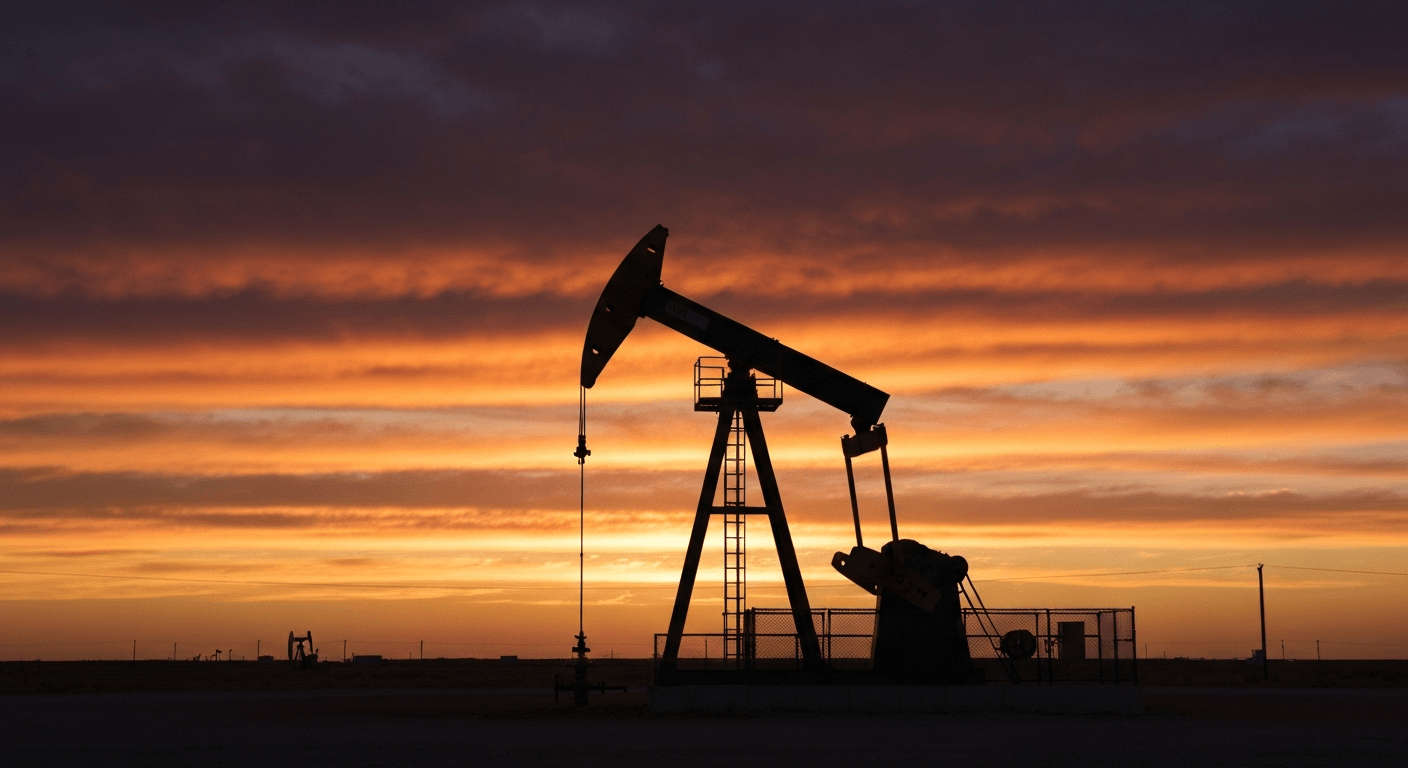
Crude oil has exploded past $110/barrel as the Iran war escalates, sending energy stocks soaring while dragging down airlines and consumer discretionary sectors.

The $110 Barrel: What Just Happened
West Texas Intermediate crude futures are trading near $110 per barrel — a level not seen since mid-2022. The catalyst? President Trump confirmed the Iran conflict would continue for at least two to three more weeks, dashing hopes of a quick resolution that had briefly lifted markets earlier this week.
For investors, this is not just a headline. It is a portfolio-altering event that touches virtually every sector of the market.
The S&P 500 closed at 6,582 on April 2, 2026, barely positive at +0.11%, while the Dow slipped 61 points. But underneath that calm surface, a massive sector rotation is underway — and the winners and losers could not be more different.
Energy Stocks Are on Fire
When oil jumps 10% in a single week, energy companies print money. The math is simple: higher crude prices mean higher revenue per barrel extracted, and most major producers have breakeven costs well below $60.
ExxonMobil (XOM) is the clearest beneficiary. With upstream operations spanning the Permian Basin, Guyana, and the Middle East, Exxon's revenue is directly tied to Brent and WTI prices. The stock has rallied over 8% in the past five trading sessions alone.
Chevron (CVX) follows a similar trajectory. Its integrated model — combining upstream production with downstream refining — gives it a double benefit when crude spikes. Refining margins tend to expand alongside crude prices as gasoline demand remains inelastic in the short term.
ConocoPhillips (COP) is perhaps the purest play on higher oil prices among the large-cap E&P names. With minimal refining exposure and a production-heavy portfolio, every dollar increase in WTI drops almost directly to the bottom line.
Meanwhile, Occidental Petroleum (OXY) — Warren Buffett's favorite energy bet — has surged as Berkshire Hathaway continues to accumulate shares. Buffett's thesis that oil would remain structurally higher appears prescient.
Oilfield services companies are also benefiting. Schlumberger (SLB) and Halliburton (HAL) both see increased demand when producers ramp up drilling activity in response to higher prices.
Who Gets Hurt: Airlines, Retail, and Consumer Discretionary
Oil is a tax on the economy. When fuel costs rise, companies with high energy exposure see their margins compress immediately.
Delta Air Lines (DAL) reported Q1 earnings this week, and while the headline numbers were solid, management flagged fuel costs as a growing headwind. Jet fuel is typically 25-30% of an airline's operating expenses, and a sustained move above $100 crude could wipe out a significant chunk of operating profit for the entire industry.
United Airlines (UAL) and American Airlines (AAL) face the same pressure. Hedging programs provide some buffer, but most airlines hedge only 12-18 months forward. A prolonged conflict means higher costs eventually flow through.
Retailers feel the pain indirectly. When consumers pay $4.50+ per gallon at the pump, discretionary spending drops. Nike (NKE) has already been struggling — the stock fell another 1% this week after multiple Wall Street firms slashed price targets. Higher gas prices only add to the consumer spending headwind.
The Broader Market Impact: A Sector-by-Sector Breakdown
Not all sectors react the same way to an oil shock. Here is how the major S&P 500 sectors are positioned:
| Sector | Impact | Key Reason | Stocks to Watch |
|---|---|---|---|
| Energy | Strong Positive | Direct revenue boost from higher crude | XOM, CVX, COP |
| Utilities | Mild Positive | Natural gas pass-through to customers | NEE, DUK |
| Financials | Neutral | Mixed: energy loans improve, consumer risk rises | JPM, BAC |
| Technology | Mild Negative | Higher input costs, data center energy bills | MSFT, GOOGL |
| Industrials | Negative | Fuel is a major operating expense | CAT, UPS |
| Consumer Disc. | Negative | Consumers have less discretionary income | NKE, AMZN |
| Airlines | Strong Negative | Jet fuel is 25-30% of operating costs | DAL, UAL |
This table is a framework, not a guarantee. Individual company fundamentals, hedging strategies, and geographic exposure all matter. But the directional bias is clear: energy wins, consumer-facing sectors lose.
Historical Context: Oil Shocks and the S&P 500
Oil price spikes have a mixed track record when it comes to broad equity performance. The 1973 Arab oil embargo crashed markets. The 2008 spike to $147 preceded the financial crisis. But the 2022 surge after Russia invaded Ukraine saw the S&P 500 eventually recover within months.
The key variable is duration. Short-lived spikes lasting three to six months tend to be absorbed by the economy. Prolonged periods of $100-plus oil lasting twelve months or more historically lead to recession risk as consumer spending contracts and corporate margins erode.
Right now, the market is pricing in a short-duration scenario — the S&P 500 is still up year-to-date. But if the conflict drags beyond Trump's two-to-three-week estimate, expect downside revisions to earnings estimates across consumer-facing sectors.
The 2022 precedent is instructive. When oil spiked that year, the S&P 500 fell roughly 20% from its peak before recovering. Energy stocks outperformed the index by over 60 percentage points during that drawdown. Investors who rotated into energy early were rewarded handsomely.
What Smart Money Is Doing Right Now
Institutional investors are making clear bets. Energy ETFs have seen over $2 billion in inflows this week alone. The SPDR S&P Oil & Gas Exploration ETF (XOP) is up 12% in April.
At the same time, put options on airline stocks have spiked dramatically. The options market is pricing in a 15-20% downside risk for major carriers if oil stays above $100 through Q2.
For individual investors, the lesson from value investing principles is clear: follow the cash flows. Energy companies are generating enormous free cash flow at these prices, and many are returning capital through buybacks and dividends. XOM currently yields over 3%, and CVX is not far behind.
Meanwhile, contrarian investors might start looking at beaten-down airline and consumer names for longer-term entry points — but only with a clear thesis on when oil normalizes.
The key question to ask about any stock in this environment: how does a sustained $100-plus oil price affect this company's free cash flow over the next four quarters? If the answer is positive, the stock is likely a buy. If negative, wait for a better entry.
The Inflation Wildcard
The Federal Reserve had been guiding rates into a neutral range of 3.50% to 3.75%, with markets expecting further cuts in the second half of 2026. But $110 oil throws a wrench into that narrative.
Higher energy prices feed directly into CPI through gasoline, heating oil, and transportation costs. They also feed through indirectly as companies pass on higher input costs. If core inflation re-accelerates, the Fed may be forced to pause or even reverse its easing trajectory.
This creates a challenging scenario for growth stocks. Higher rates compress valuation multiples, particularly for long-duration assets like technology companies that derive most of their value from future earnings. Tesla (TSLA) already dropped over 5% this week after missing Q1 delivery estimates — and the rate environment could make things worse.
For a deeper understanding of how interest rates affect stock valuations and investment strategies, the relationship between discount rates and present values is critical to grasp.
Bond yields have already started ticking higher in anticipation. The 10-year Treasury yield moved above 4.2% this week, and if oil remains elevated, 4.5% is not out of the question. That level historically acts as a ceiling for equity multiples.
Five Stocks to Watch This Month
Here are five stocks most directly impacted by the current oil price environment:
- ExxonMobil (XOM) — Largest U.S. oil major, direct beneficiary of $110-plus crude. Q1 earnings should be exceptional.
- Occidental Petroleum (OXY) — Buffett-backed pure-play with the highest operating leverage to oil prices among large caps.
- Delta Air Lines (DAL) — Early earnings reporter already showing fuel cost pain. Bellwether for the transport sector.
- ConocoPhillips (COP) — Production-focused E&P with minimal downstream exposure. Pure oil price play.
- Nike (NKE) — Already weak fundamentals now facing consumer spending headwinds from higher gas prices.
What to Watch Next Week
Markets were closed Friday, April 3 for Good Friday. When trading resumes Monday, all eyes will be on several key catalysts.
Iran conflict developments top the list. Any ceasefire signals would send oil sharply lower and reverse the energy-consumer dynamic overnight. March jobs data is next — strong employment numbers could offset recession fears but also complicate the Fed's rate path.
Bank earnings kick off mid-April. JPMorgan (JPM) and Wells Fargo (WFC) will provide crucial commentary on consumer credit quality and energy loan exposure. Check out our earnings coverage on the blog for detailed previews.
Weekly EIA oil inventory reports will show whether supply disruptions are materializing beyond price action.
Key Takeaways for Your Portfolio
The Iran-driven oil surge is the single most important macro variable in markets right now. Whether you are long energy, short airlines, or just trying to protect your retirement portfolio, understanding the cascade of effects from $110 oil is essential.
The playbook is straightforward: overweight cash-flow-positive energy producers, underweight fuel-dependent sectors, and keep a close eye on inflation data that could shift the Fed's calculus. This is not a time for passive investing — it is a time for active, informed decision-making.
Ready to analyze these stocks yourself? Search any ticker on MainRatios to see valuations from 6 legendary investors - free.
See the full analysis of $XOM
Live P/E chart, financials, and valuations from 6 legendary investors — free.
Analyze $XOM